
Home › Ideologies › Old Labour
Old Labour
The Union in Power
«Those who work deserve a voice in running the country.»
Classic Labour, born from the British trade unions and brought to power by Attlee in 1945: a universal welfare state, a public health service, nationalization and full employment, gradual reform and loyalty to the Atlantic alliance, deeply rooted in working-class communities.
In short
On the traditional scale, this ideology sits in the center-left camp. The clearest positions are on economy: strongly towards “equality”; devolution: fairly towards “centralism”; foreign policy: fairly towards “interventionism”; method: fairly towards “reform”. On society, sovereignty, environment, democracy and immigration it stays balanced. Among the other ideologies, the closest is social conservatism (85%).
Principles
- Political representation for labor
- Universal welfare state
- Pragmatic reformism
A party tied to the unions that brings labor's interests into government.
Common criticisms
Where it comes from
It was born in Britain in 1900 from the alliance of unions and socialist societies; the 1945 Attlee government created the National Health Service.
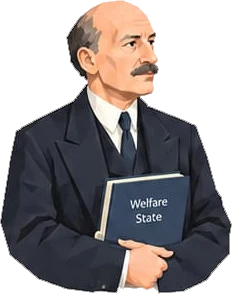
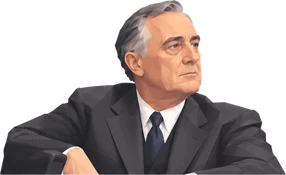
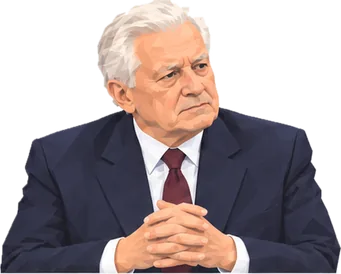
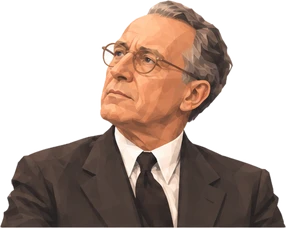
Key figures: Clement Attlee, Jeremy Corbyn, Mette Frederiksen
Further reading: The Future of Socialism — Anthony Crosland
Position on the 13 axes
Similar ideologies
Social conservatismThe Guardian of the Family85%PeronismThe Descamisado85%Patriotic socialismThe Sovereign Partisan84%Closest parties in Europe
 Sinn FéinIreland93%
 ArbeiderpartietNorway91%
 SocialdemokraternaSweden90%
 Lietuvos socialdemokratų partijaLithuania90%
Closest figures

Positions are estimates based on documented ideas, platforms and actions, updated to October 2026.